
Procedures
Your guide to cataract surgery
The doctors and staff at Price Vision Group in Indianapolis take great care in providing a personalized experience and service during your cataract surgery. Our ophthalmologists are world-renowned cornea specialists and are at the forefront of cornea research. Although cataract surgery is one of the most common procedures performed in the world, we understand that this isn’t a common procedure for you. We know that having cataract surgery is both a nervous and exciting step in your journey to see clearly again. We hope the information we’ve provided below will answer questions you may have about the process before, during and after your cataract surgery.

Conditions
What is a cataract?
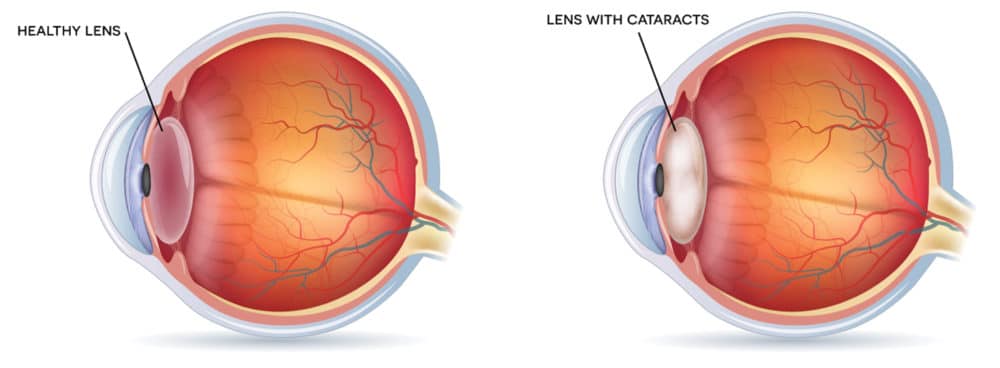
A cataract is a cloudiness of the crystalline lens inside your eye that leads to a decrease in vision. Cataracts typically form as you age and progress to the point where it’s necessary to remove the lens and replace it with an artificial intraocular lens (IOL).
The Procedure
What happens during my cataract surgery?
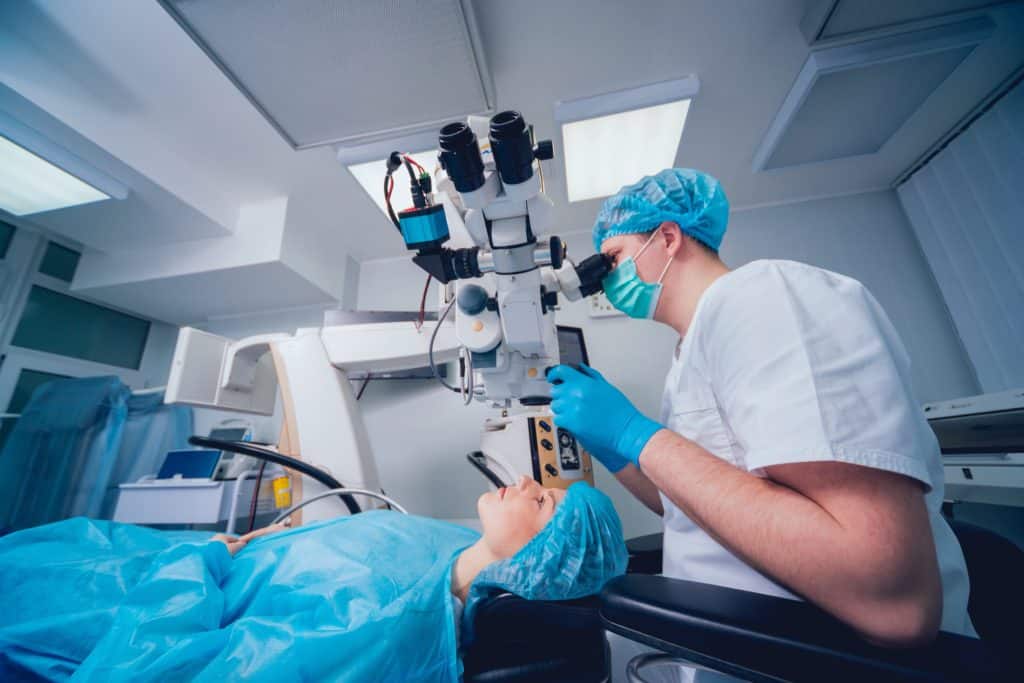
Cataract surgery performed by Dr. Francis Price, Jr., Dr. Matthew Feng, and Dr. Anjulie Gang at Price Vision Group in Indianapolis takes only minutes to complete with minimal discomfort. Your cataract surgeon will make a very small incision and insert a tiny ultrasonic probe that breaks up your cloudy lens into microscopic particles using high-energy sound waves. This process is called phacoemulsification. These particles are then suctioned out. The artificial IOL of your choice is then inserted and positioned, effectively replacing the old cloudy lens of your eye with a clear version.
The amazing part is that the tiny incision is “self sealing” and usually requires no stitches. It remains tightly closed by the natural outward pressure within the eye, where it heals quickly. This technique makes recovery prompt and comfortable. Most patients notice an immediate improvement in visual clarity.
A typical cataract surgery
Technology
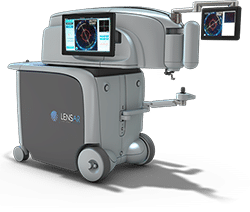
LENSAR® Laser System for cataract surgery
Price Vision Group is proud to offer our cataract surgery patients the LENSAR® Laser System. This device offers a more precise cataract surgery procedure by utilizing LENSAR’s Cataract Laser with Augmented Reality™ technology, a unique imaging system that provides a sophisticated, 3-D view of your eye to help plan and treat your cataract.
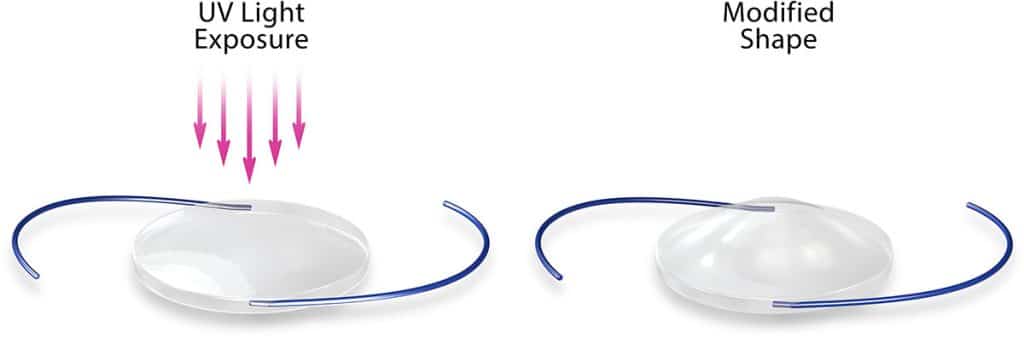
Light Adjustable Lens™ from RxSight®
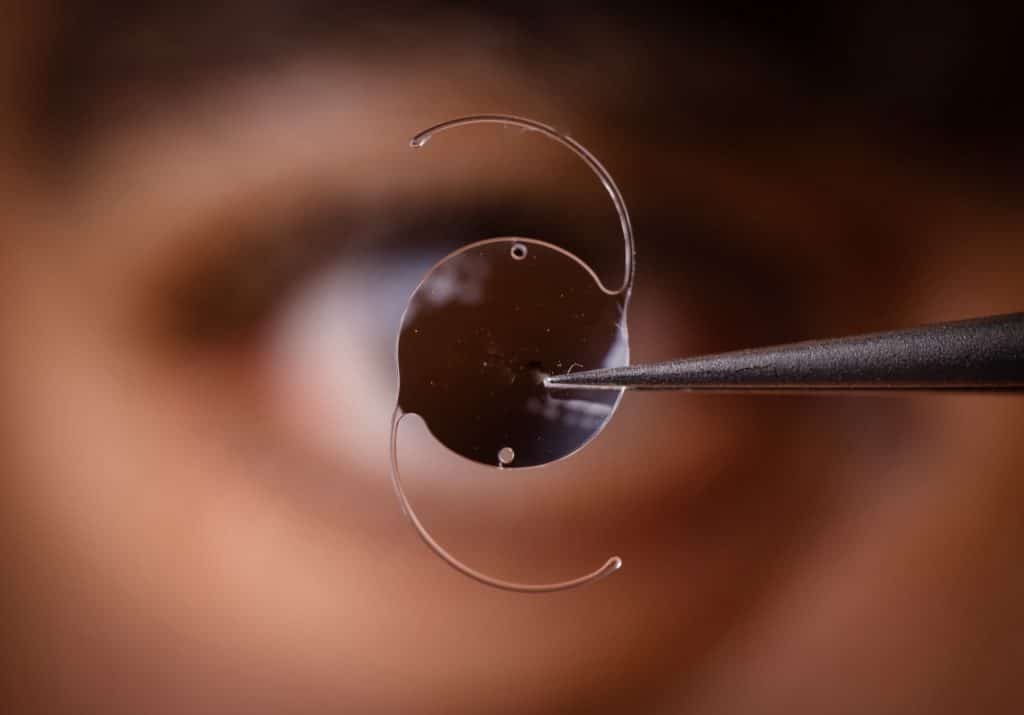
Price Vision Group is excited to offer the Light Adjustable Lens™ for our cataract surgery patients. The lens is made of a special material that was designed by a Nobel Prize-winning scientist and is the first intraocular lens (IOL) that allows the physicians of Price Vision Group to optimize your vision following cataract surgery.
Lens Options
What are my options for new lenses (IOLs)?
During cataract surgery, the cloudy natural lens in the eye is removed and replaced with an artificial IOL. Today, advancement in new lens technology has given Price Vision Group the opportunity to offer several IOL options to best fit your needs and lifestyle. After eye measurements are taken, your doctor will help you decide which lens is right for you based on physical and personal factors. Not all patients will be candidates for Multifocal IOLs or Advanced Technology Extended Depth of Focus IOLs. Some personal factors to consider are activities you’d like to perform without the need of glasses, specific distances you’d prefer to see clearly without glasses, and additional financial resources available to purchase more advanced technology lenses with greater benefits. We offer patient financing for your out-of-pocket expenses for any of these options through CareCredit®.
An overview of your IOL options
Monofocal IOL
Basic monofocal IOL
Simulated vision
Cataract

Monofocal

Distances seen clearly
Glasses will be needed for near and intermediate distances

Toric (astigmatism-correcting) IOL
Toric IOLs require an additional financial contribution
Simulated vision
Cataract w/astigmatism

Toric IOL

Toric available for the following IOLs
TECNIS Symfony® IOL
Premium extended depth of focus (EDOF) IOLs require an additional financial contribution
Simulated vision
Cataract
Symfony® IOL

Monofocal IOL

Symfony® IOL

Distances seen clearly
Glasses might be needed for small print or in dark environments

AcrySof®IQ PanOptix® IOL
Premium trifocal IOLs require an additional financial contribution
Simulated vision
Cataract
PanOptix® IOL
Monofocal IOL
PanOptix® IOL

Distances seen clearly
Glasses might be needed for small print or in dark environments
Recovery
What happens after my cataract surgery?
The procedure is performed on a simple outpatient basis and usually only takes 10-15 minutes per eye.
After cataract surgery, your surgeon will place a patch or protective shield over the operated eye. When removed, your vision may be blurry for the next few hours as your eye heals and adjusts but should improve within a few days. Many patients see improvements a day after surgery and return to normal activities such as driving.
Colors may appear more vibrant after undergoing cataract surgery. This is normal as you are now viewing things through a new, clear lens after a significant amount of time viewing things through a cloudy lens. It is also normal to experience redness, itchiness and mild discomfort of the eye for a few days following surgery. Please avoid rubbing your eye.

Eye Drops
Many of our patients can choose to receive an injection at the conclusion of surgery to minimize the need for eye drops after surgery. Patients with advanced technology lenses or toric lenses will be provided with specific eye drops. Your doctor might prescribe specific eye drops if allergies or other conditions prevent the use of the eye drops we provide. Follow-up appointments will be scheduled in a day or two, the following week and a month after surgery to monitor the healing process and eye health.
Comfort
Most eye discomfort should subside a few days after surgery.
Second Eye
If both eyes require cataract surgery, your doctor will typically wait at least a week before performing the second eye surgery to ensure proper healing of the first eye.
Testimonials